

Hello everyone! Are you enjoying your trip in Okinawa?
This time, I’d like to introduce Shuri Castle, one of the most popular tourist spots in Okinawa.
Shuri Castle is a famous place that many visitors come to see.
It was once the political and cultural center of the Ryukyu Kingdom.
The bright red buildings, strongly influenced by Chinese culture, are especially impressive.
Unfortunately, in October 2019, a fire destroyed many of the main buildings.
Now, the reconstruction has started again as a “Visible Restoration,” so visitors can watch the rebuilding process.
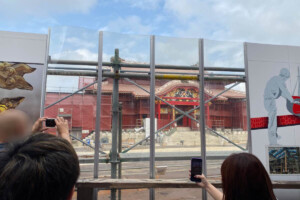
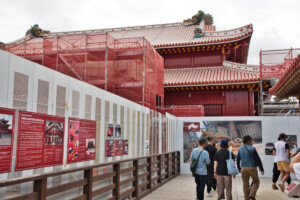
When I visited Shuri Castle again recently, I could see the outside of the Main Hall under repair through a gap in the construction walls!
In this article, I will show you what Shuri Castle looks like now, as of April 2026.
 Taira
TairaThe Seiden(Main Hall) is scheduled to be completed in autumn 2026!
Explore Okinawa with just a tap! Click here to see our sightseeing guide.

Shuri Castle: Features and Highlights
- What is Shuri Castle? Former Center of the Ryukyu Kingdom
- Many buildings Lost in the 2019 Fire! “Visible Restoration” Ongoing
- Highlight 1: “Shureimon Gate,” An Independent Entrance Gate
- Highlight 2: “Beautiful Castle Walls,” The smooth curves are truly art!
- Highlight 3: Beautiful and Colorful “Gates”
- Highlight 4: “Seiden (Main Hall),” Currently under Reconstruction!
- Highlight 5: “2 Observation Decks,” Panoramic View of Naha City!
- Highlight 6: “Other Highlights,” introducing all at once
What is Shuri Castle? Former Center of the Ryukyu Kingdom
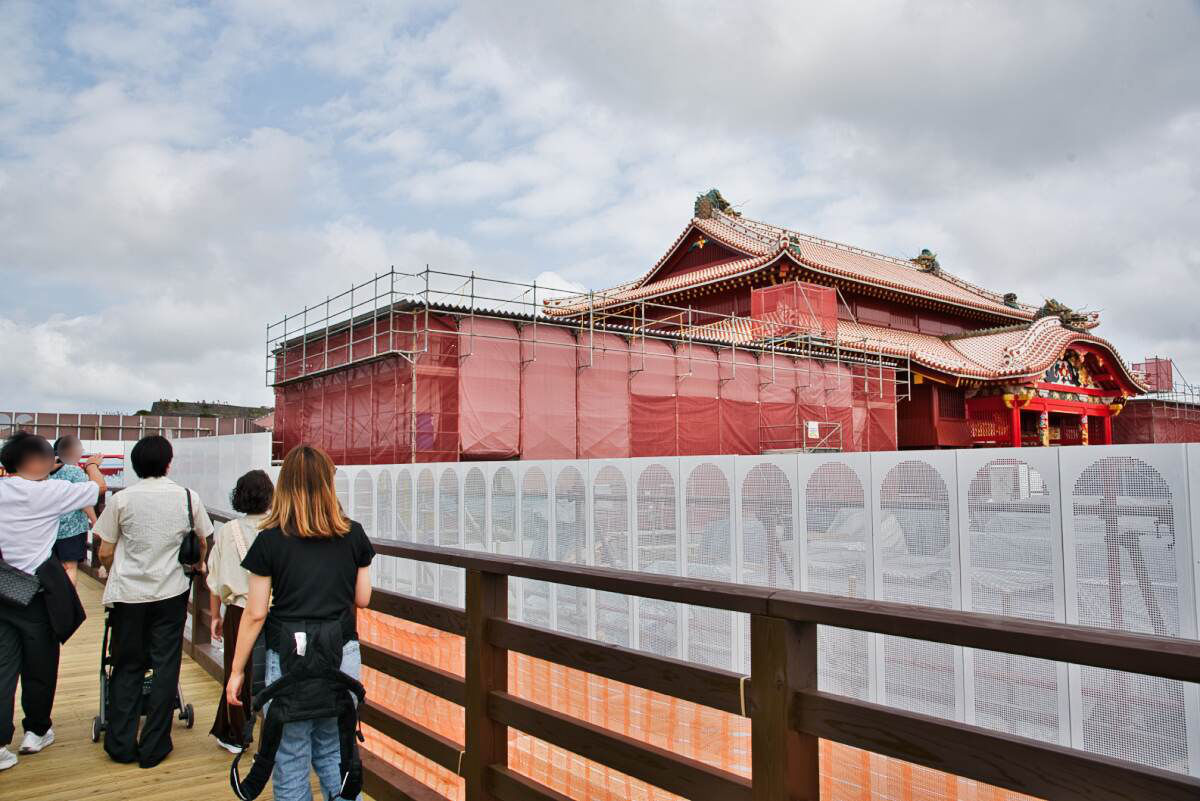
Shuri Castle is the royal residence where the Ryukyu Kingdom flourished for about 450 years.
It was truly the center of the kingdom, where politics, diplomacy, and sacred rituals were carried out.
Another major feature is that it incorporates a unique architectural style different from mainland Japan, influenced by exchanges with China and Southeast Asia.
The red roof tiles and vivid vermilion buildings give visitors a sense of an exotic atmosphere.
In 2000, it was also registered as a World Heritage Site as part of the “Gusuku Sites and Related Properties of the Ryukyu Kingdom.”
Shuri Castle has been loved by the people of Okinawa and visitors as a symbol of Ryukyu and Okinawa, both in the past and today.
Many buildings Lost in the 2019 Fire! “Visible Restoration” Ongoing
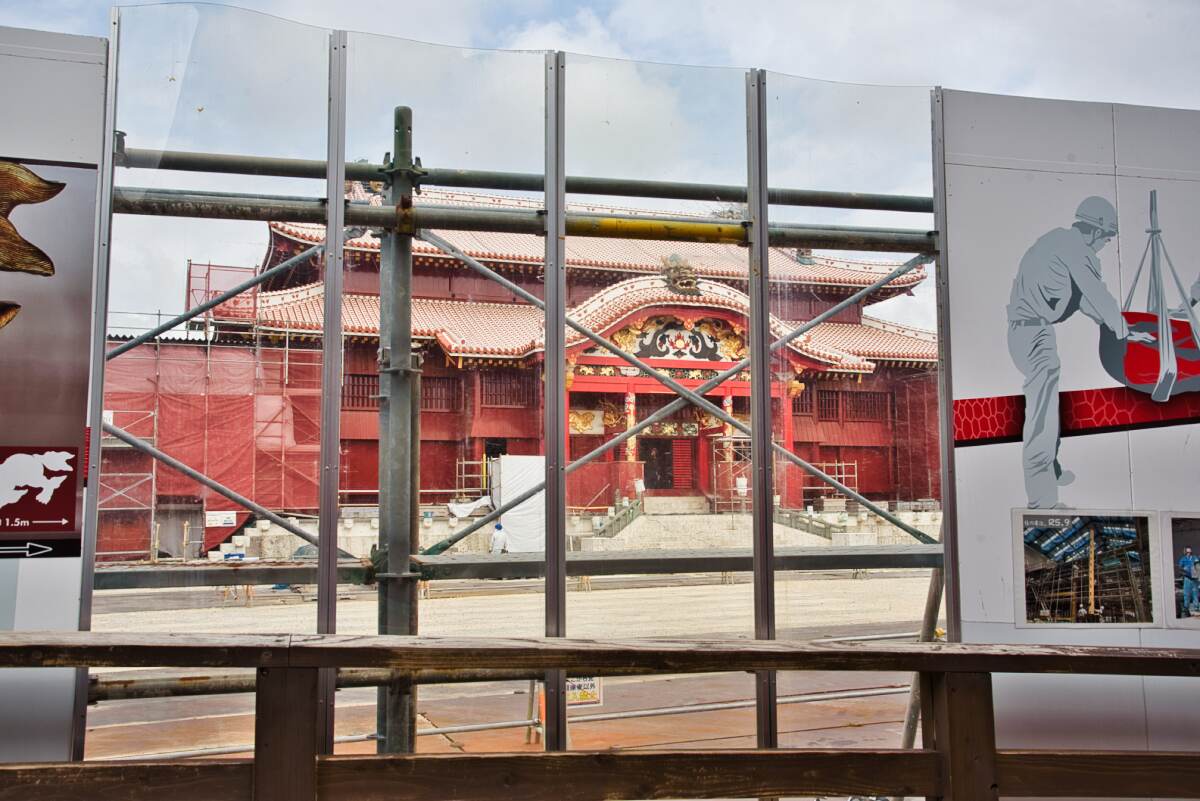
In October 2019, a fire destroyed the main buildings, including the Main Hall, at Shuri Castle.
However, reconstruction is now progressing under the theme of “Visible Restoration,” with the rebuilding process open to the public.
From the viewing route, you can closely see the construction work and traditional techniques, making it a valuable learning experience beyond simple sightseeing.
Being able to experience the restoration process now can be called a special moment to witness the revival of history.
Now, let’s take a look at the highlights of Shuri Castle.
Shuri Castle Park is very large, so it is recommended to check the highlights before your visit.
Highlight 1: “Shureimon Gate,” An Independent Entrance Gate
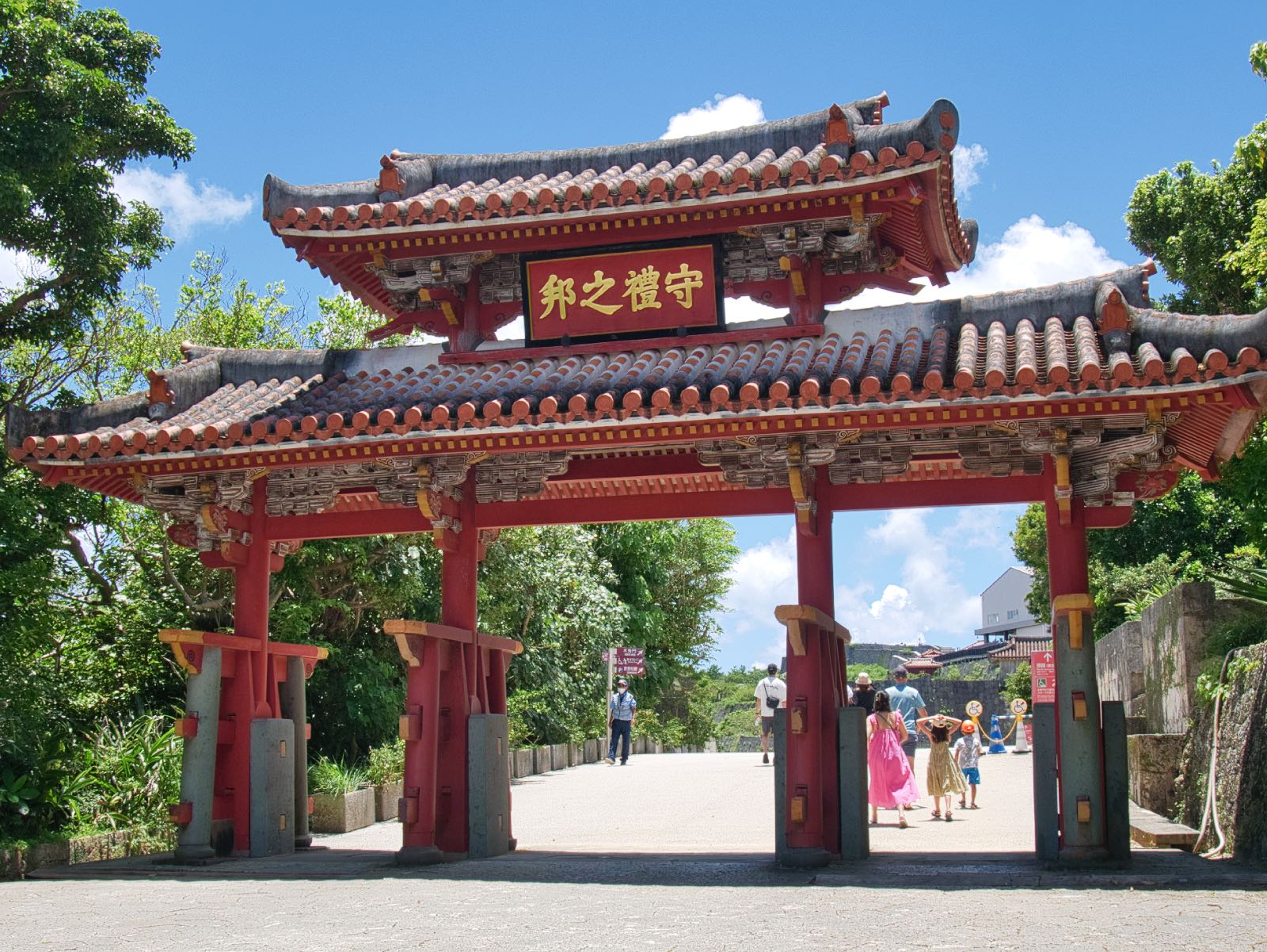
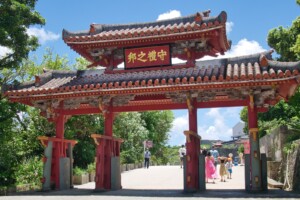
A symbol of sightseeing at Shuri Castle is Shureimon Gate, known for its impressive vivid red color.
A plaque reading “Shurei no Kuni (Land of Propriety)” is displayed, symbolizing the Ryukyuan spirit of valuing courtesy.
It is said that when messengers arrived from China, the King himself would go as far as the Shureimon Gate to welcome them.
This gate is also an independent gate that is not connected to the castle walls, combining Chinese architectural style with Ryukyuan red roof tiles.
It is also popular as a photo spot and is a place you will want to visit for a memorable photo.
Highlight 2: “Beautiful Castle Walls,” The smooth curves are truly art!
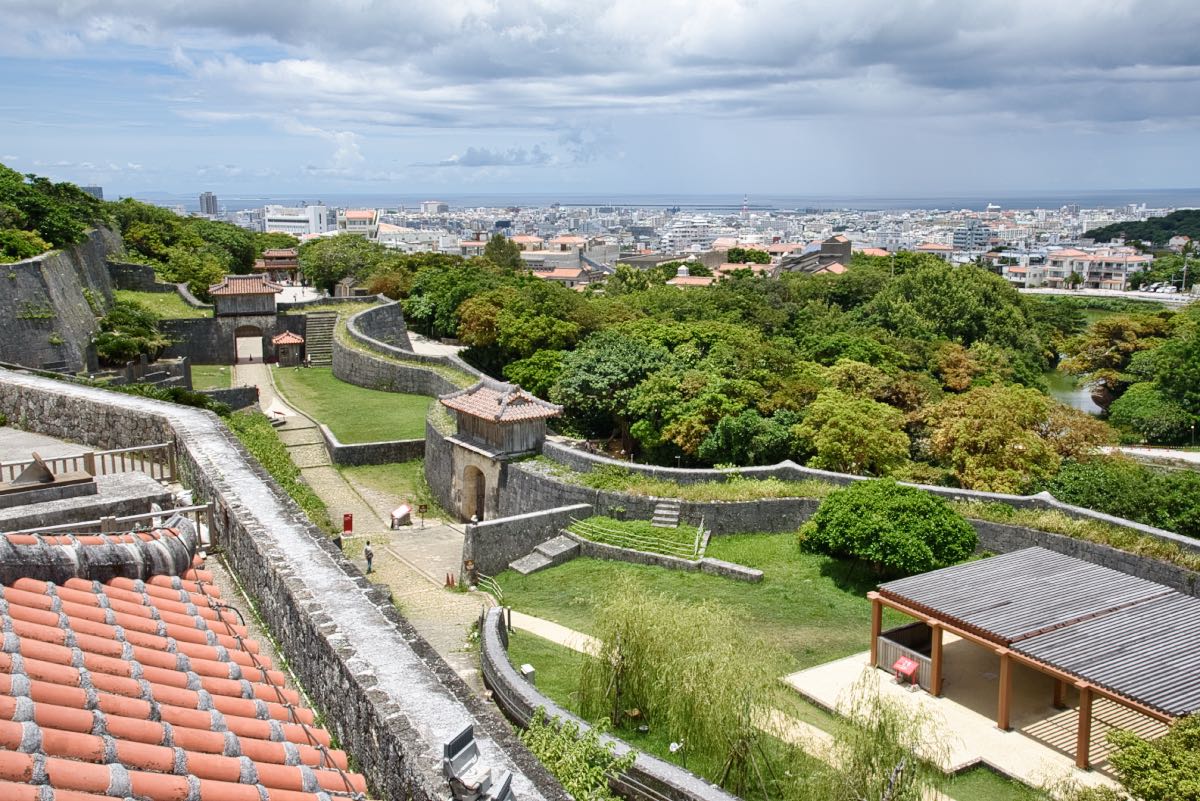
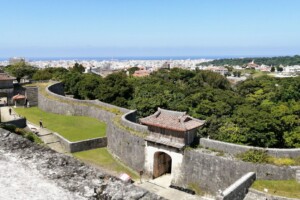
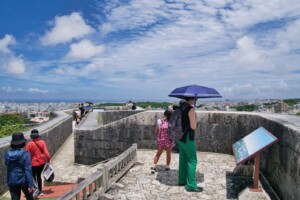
The stone walls of Shuri Castle are characterized by their unique curved beauty made from Ryukyu limestone.
Since this shape cannot be seen on mainland Japan, first-time visitors to Okinawan Castles (Gusuku) will surely be surprised.
The walls, built using techniques called “nozura-zumi” and “aikata-zumi,” combine both strength and beauty.
They also have excellent defensive functions, allowing enemies to be efficiently repelled.
It is one of the highlights you will want to observe carefully as you walk.
Highlight 3: Beautiful and Colorful “Gates”
At Shuri Castle, besides Shureimon Gate, there are many other impressive gates scattered throughout the site.
While Shureimon Gate is an independent gate not connected to the castle walls, the other gates are connected to the walls.
Let’s take a look at some of them.
Kankaimon Gate: The First Gate to Enter Shuri Castle
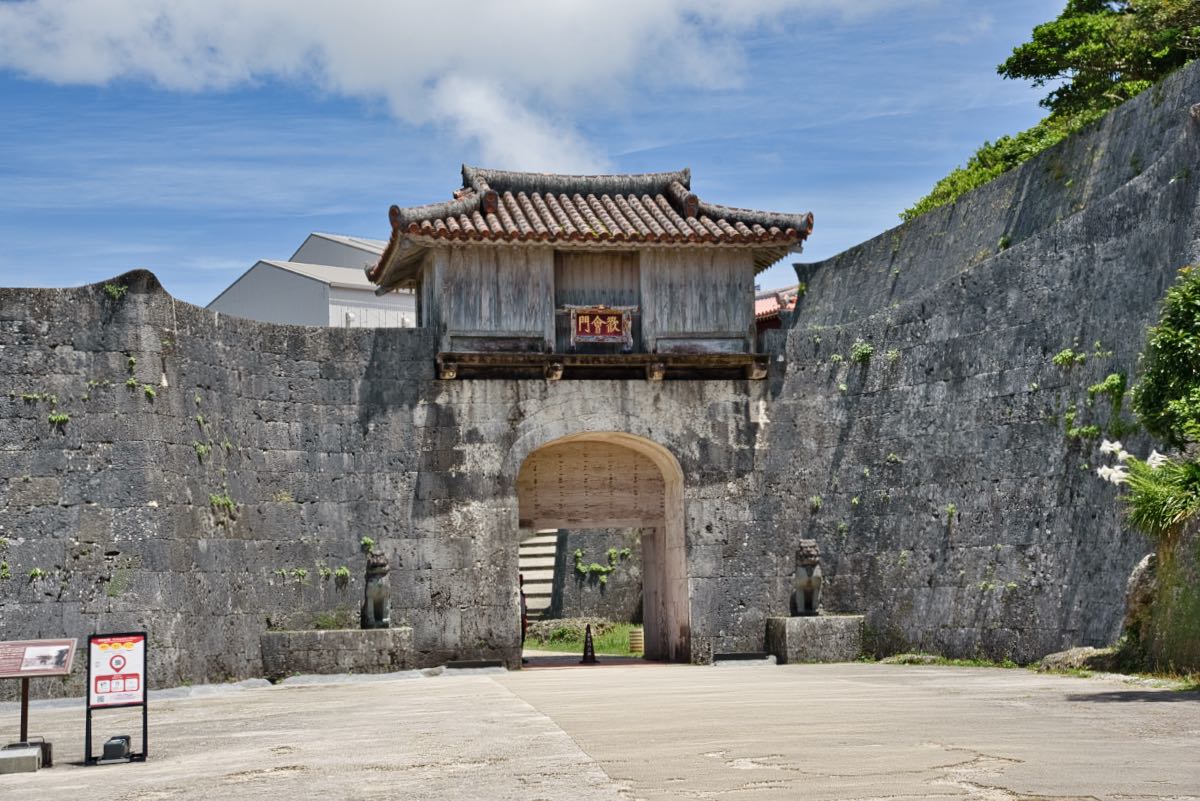
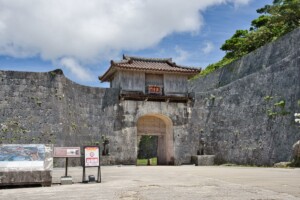
When entering Shuri Castle, the first gate you pass through is “Kankaimon Gate.”
It is a Welcome Gate that greets visitors.
It is an “Arch Gate,” with a wooden turret built on top of an arched stone structure.
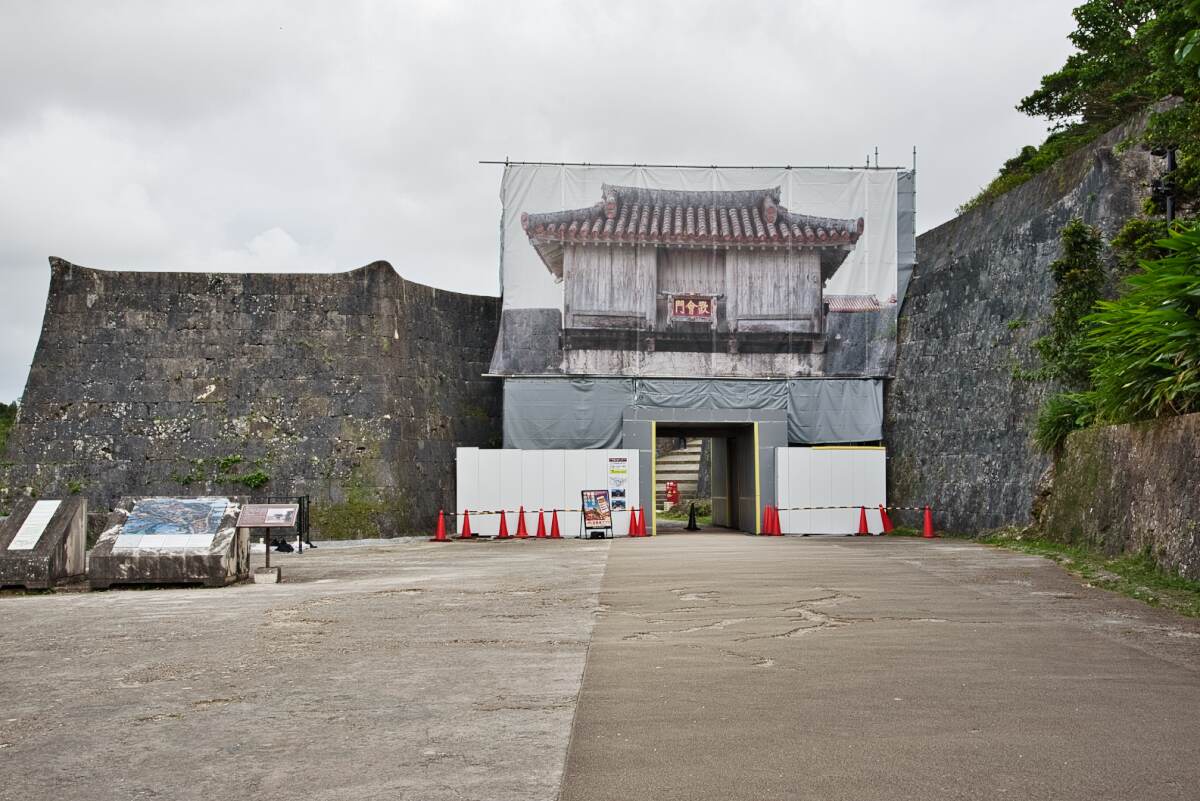
Unfortunately, as of April 2026, Kankaimon Gate is under repair.
Zuisenmon Gate: Name Reflects the Spring Water
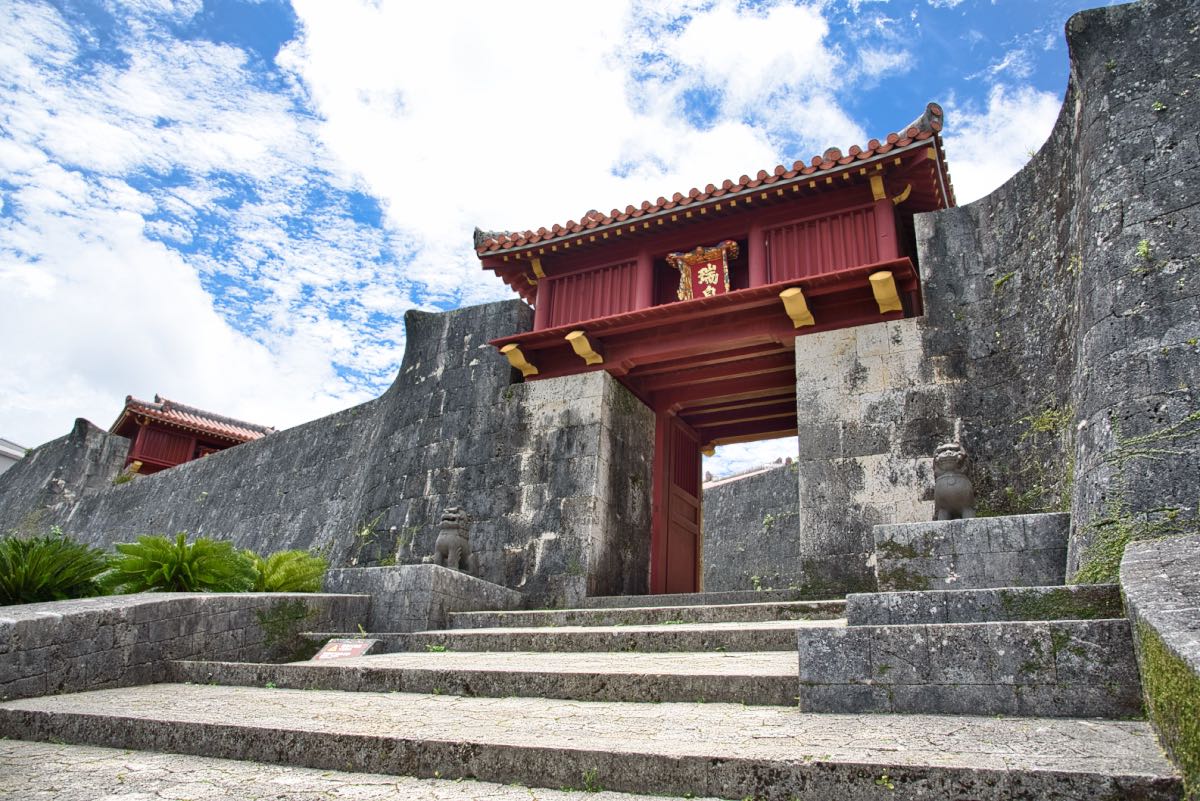
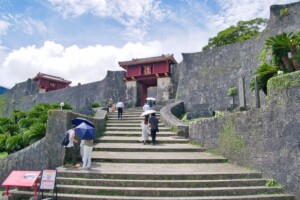
After passing Kankaimon Gate and going up the stairs, you will find “Zuisenmon Gate“.
IT is a “Yagura Gate,” with a wooden turret built on top of the divided stone walls.
You can find the famous spring water called “Ryuhi” along the way.
I will introduce it later.
Differs depending on the location of the walls (inner or outer)
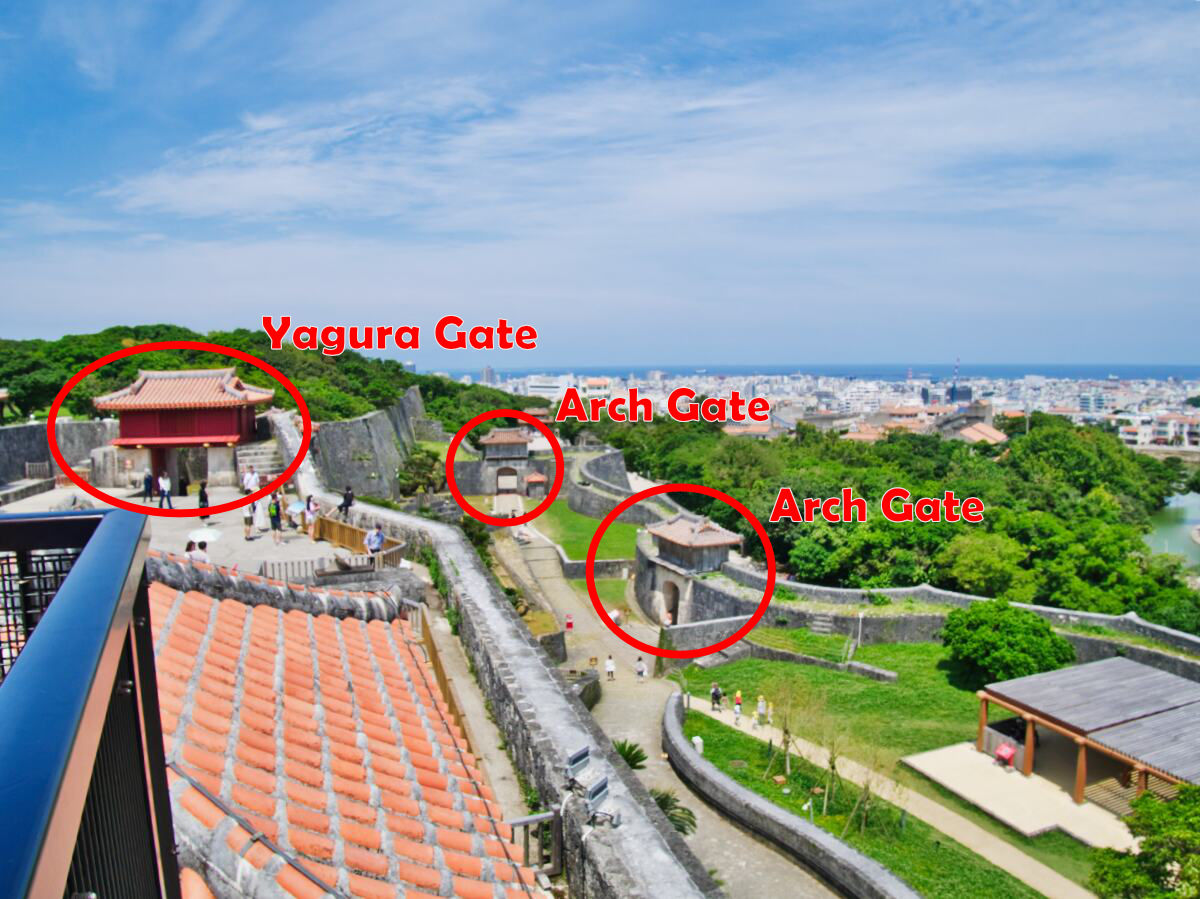
The stone walls of Shuri Castle are double-layered.
There are the Inner Walls (Inner Enclosure) and the Outer Walls (Outer Enclosure).
The Inner Walls are older, and the Outer Walls were added later, so they are newer.
Kankaimon Gate on the Outer Side is an “Arch Gate,” while Zuisenmon Gate on the Inner Side is a “Yagura Gate.”
It is quite interesting to compare the structures of the other gates as well.
Highlight 4: “Seiden (Main Hall),” Currently under Reconstruction!
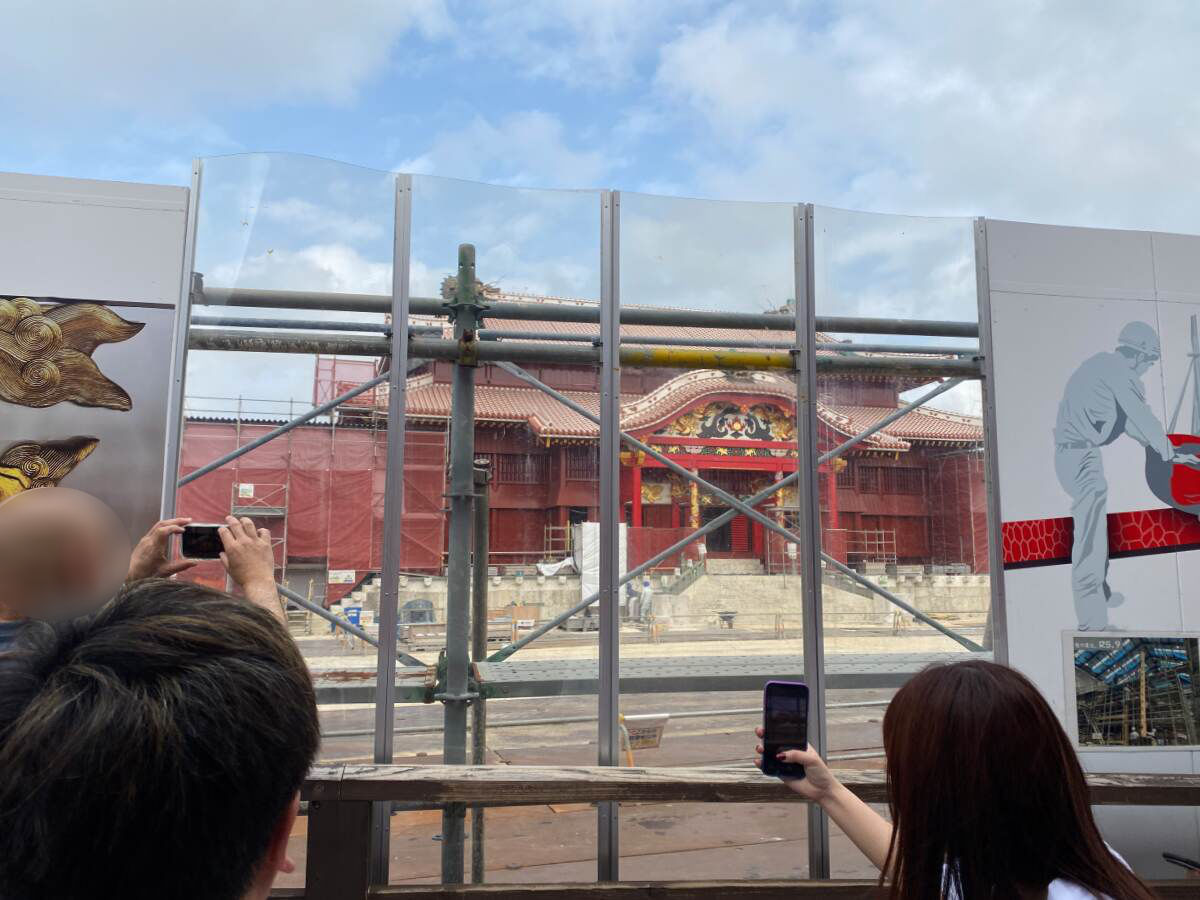
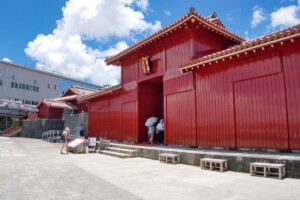
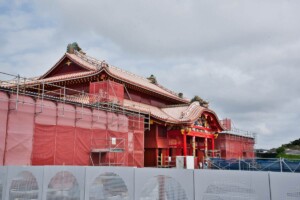
The biggest highlight at Shuri Castle right now is, of course, the “Seiden (Main Hall)” under reconstruction.
You cannot enter inside, but you can view the exterior of the Main Hall from above or through gaps in the construction walls.
Even while covered by construction walls, the steady progress toward completion is truly impressive.
It is a rare and special experience to witness the traditional techniques used to recreate this historic site.
One of the best parts is that you can feel the changes each time you visit.
Highlight 5: “2 Observation Decks,” Panoramic View of Naha City!
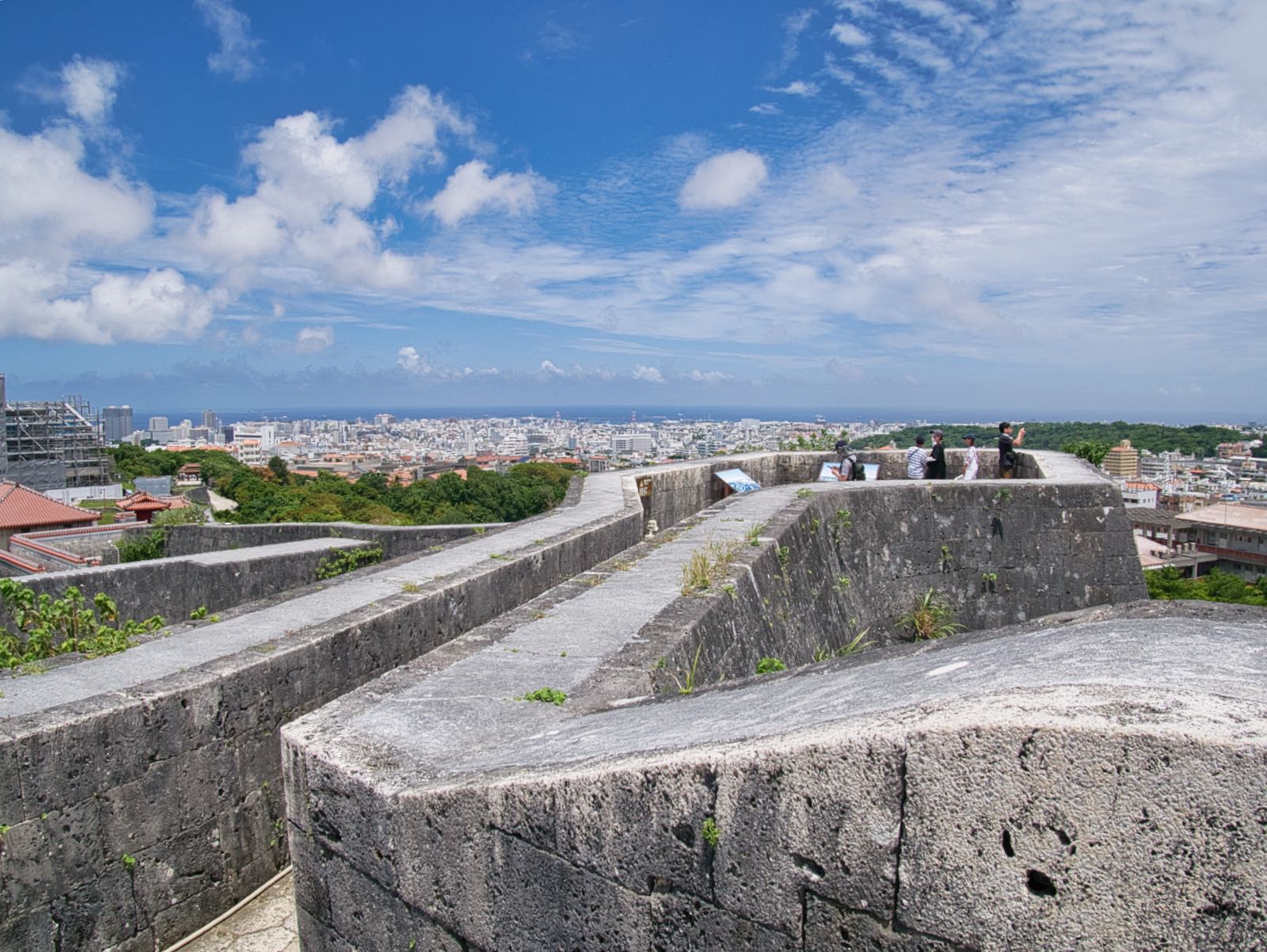
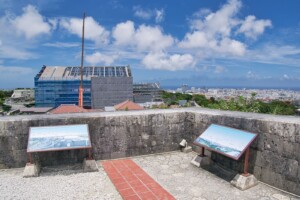
Shuri Castle is located on a hill, and there are Two Observation Spots in the park where you can overlook Naha City.
The most recommended one is “Agari no Azana,” located in the paid area.
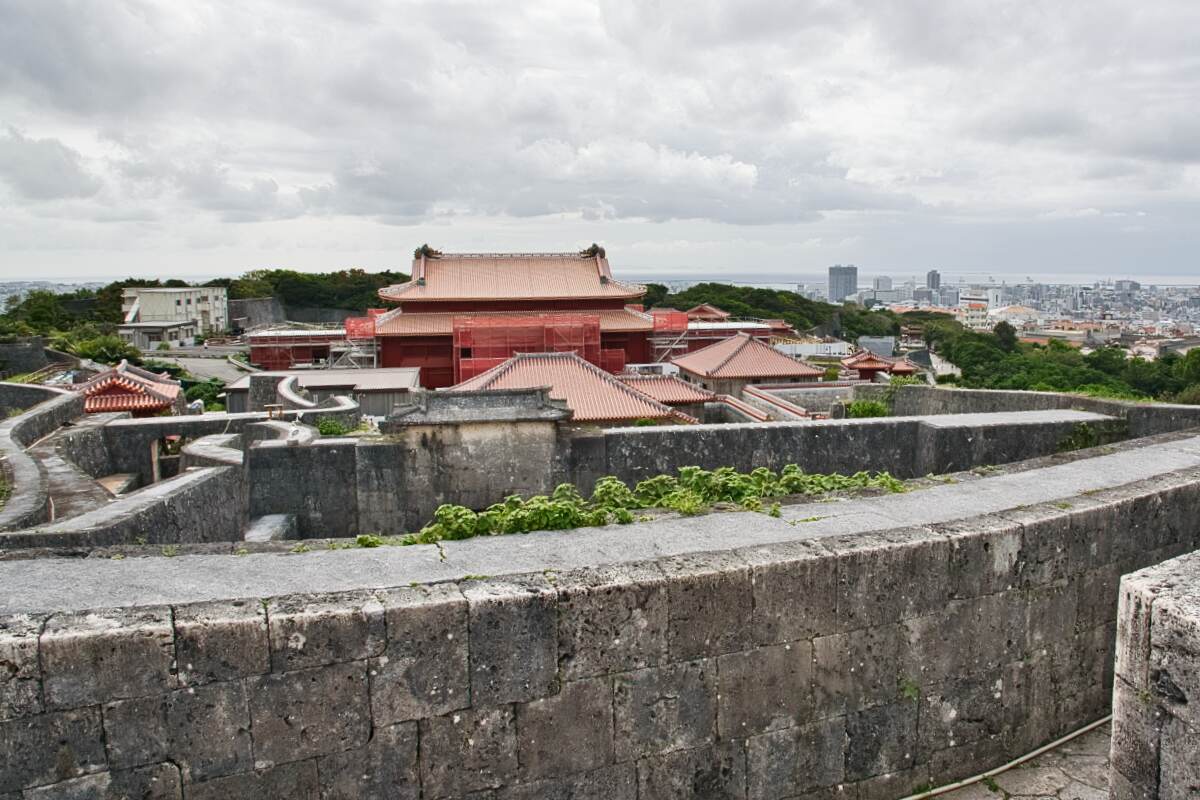
It is the highest point inside Shuri Castle, where you can see the whole view of the Main Hall and the castle walls.
On a clear day, you can see far into the distance, making it perfect for photography.
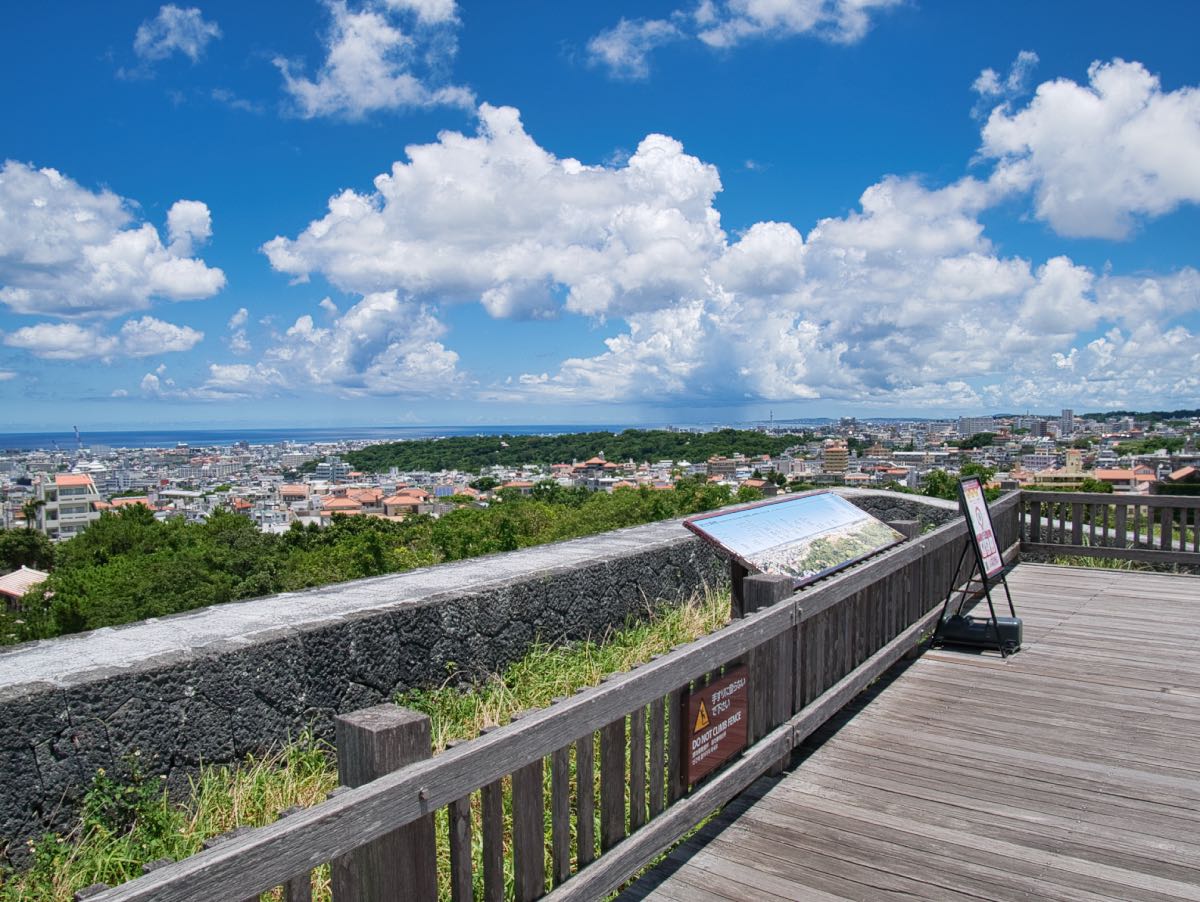
There is also an observation spot called “Iri no Azana” in the free area of Shuri Castle.
It is a little off the standard route, but it is a place you should definitely visit if you have time.
From here, you can also overlook Naha City and even see as far as the Kerama Islands in the distance.
Highlight 6: “Other Highlights,” introducing all at once
- Sonohyan-Utaki Ishimon: The King’s Prayer Gate
- Ryuhi: Dragon-head Water Spout
- Suimui Utaki: Sacred Site Surrounded by Stone Walls
- Great Dragon Pillar Exhibition: Pillars That Survived the Fire
- Zenikura: Former Storage Warehouse
- Gama Ruins: War Shelter Site
- The View under “Agari no Azana”: Scenic Spot
- Benzaitendo: Beautiful Small Temple
- Enkakuji Ruins: Royal Temple Site
Shuri Castle Park is very large and has many things to see.
Here is a quick introduction to some other popular spots in the park.
Sonohyan-Utaki Ishimon: The King’s Prayer Gate
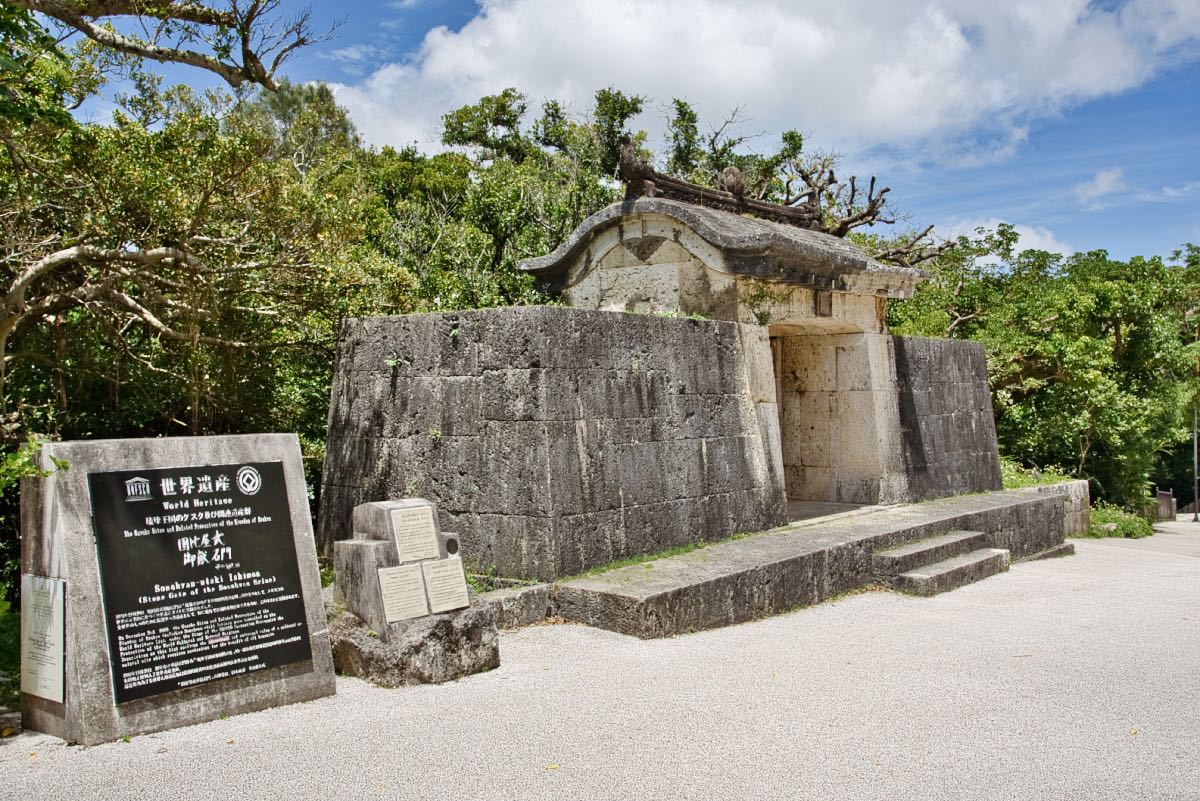
It is a sacred site where the king of the Ryukyu Kingdom prayed for safety when leaving the castle to make pilgrimages or travel to other places.
It is also registered as a World Heritage Site.
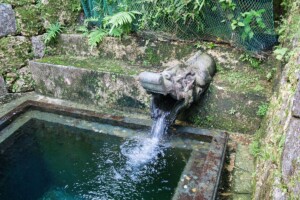
Ryuhi: Dragon-head Water Spout
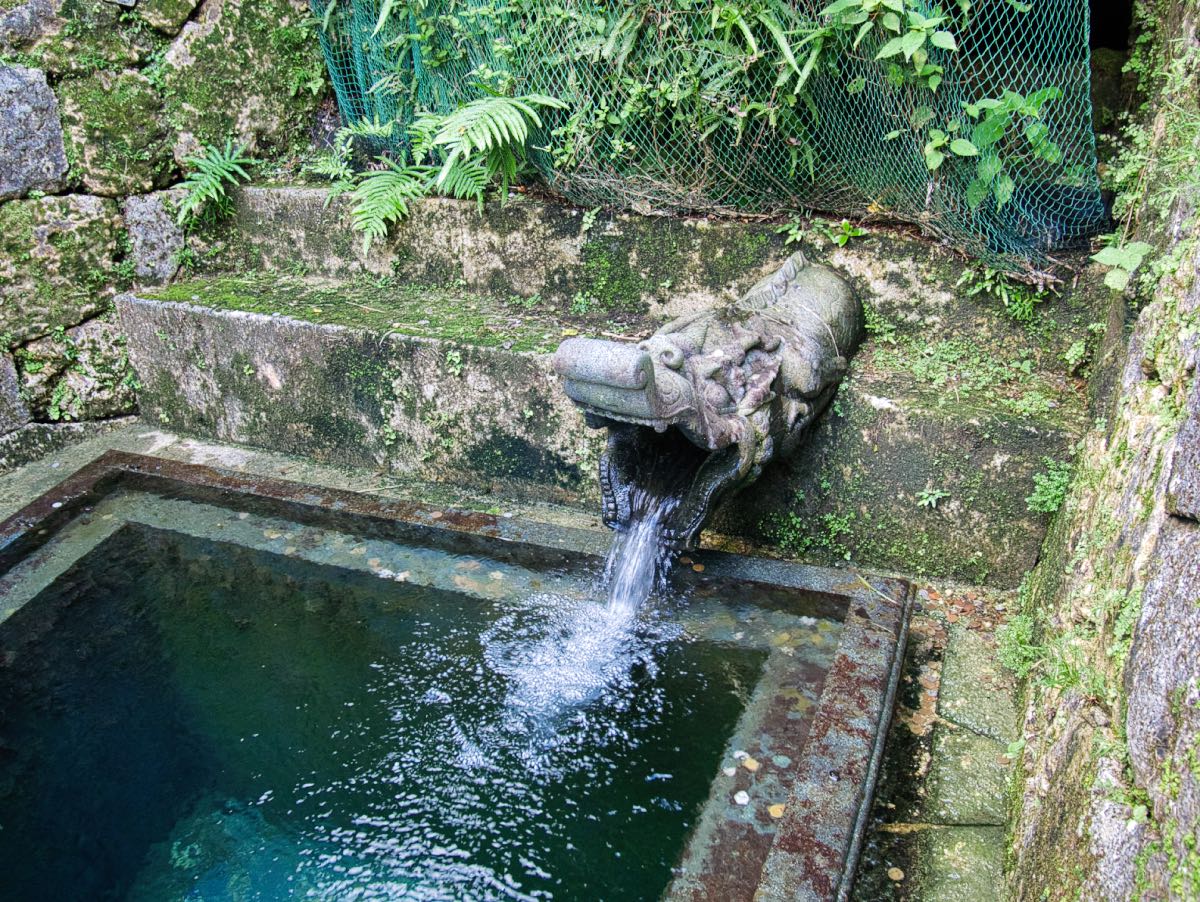
The Ryuhi is a natural spring located on the way up the stairs of “Zuisenmon Gate”.
The water coming out of the Dragon’s Mouth was very special.
It was delivered every day to the King, and also to the officials visiting from China.
Although Shuri Castle was destroyed during the Battle of Okinawa, this dragon-shaped stone was later found on the grounds and restored.
Suimui Utaki: Sacred Site Surrounded by Stone Walls
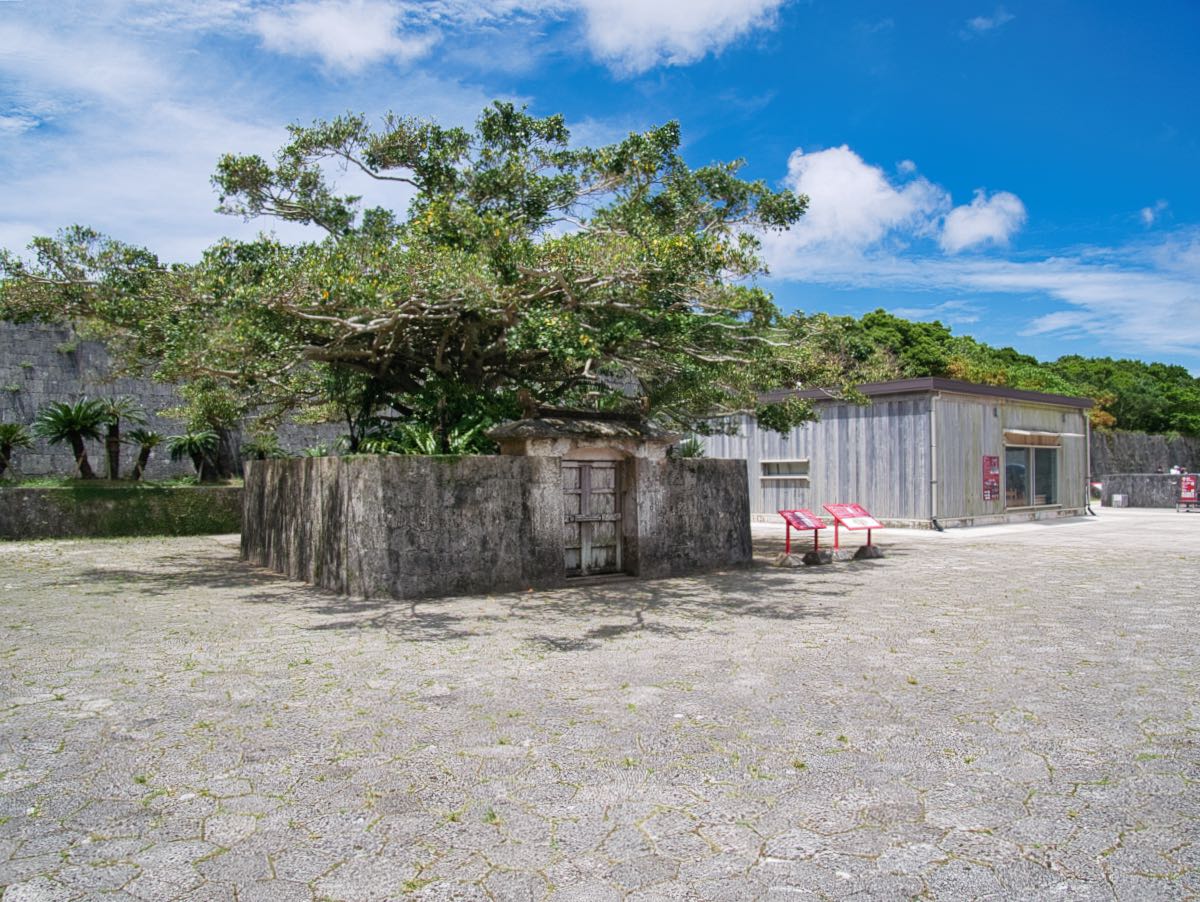
“Suimui Utaki” is a Sacred Prayer Site surrounded by stone walls.
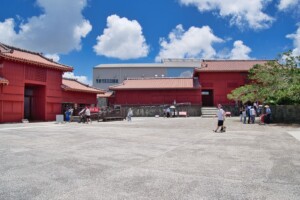
It is located in the “Shicha-nu-Una” Plaza in front of the Main Hall.
It is a particularly sacred place of prayer in Shuri Castle.
Great Dragon Pillar Exhibition: Pillars That Survived the Fire
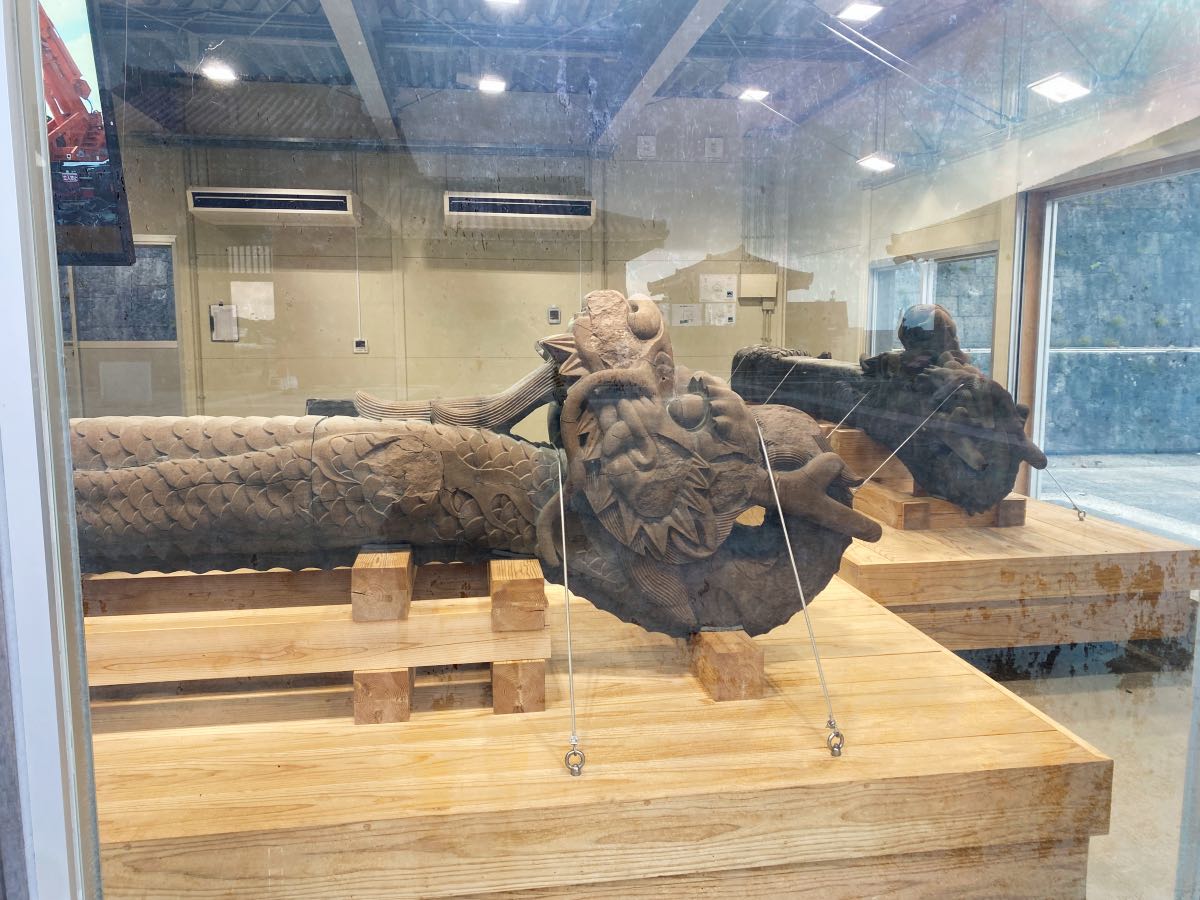
This is a facility where you can see the Great Dragon Pillars from the Main Hall being repaired and displayed.
It is located in the “Shicha-nu-Una” Plaza in front of the Main Hall.
Zenikura: Former Storage Warehouse
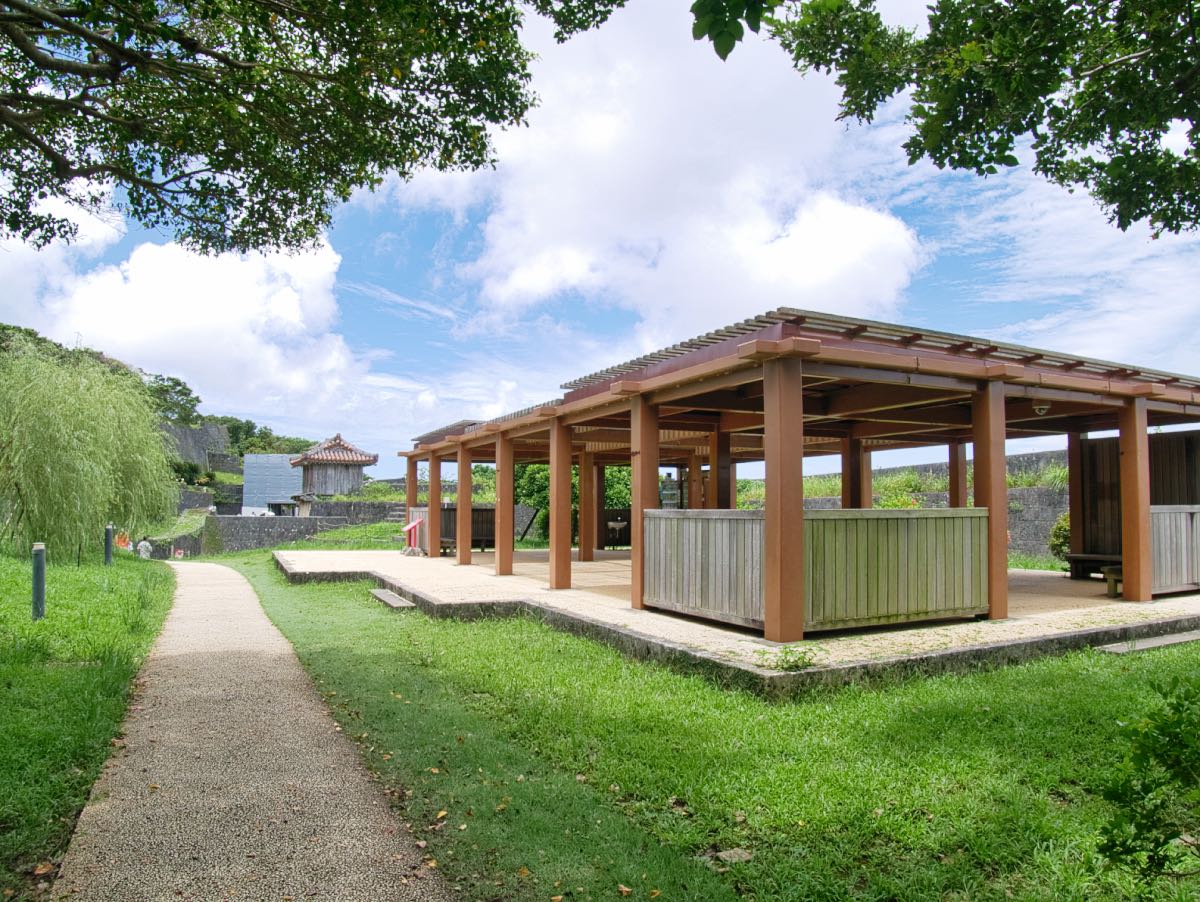
This was a warehouse used to store treasures and important items during the Ryukyu Kingdom era.
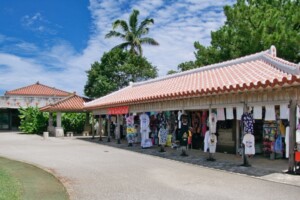
Currently, it is used as a rest area for visitors.
Gama Ruins: War Shelter Site
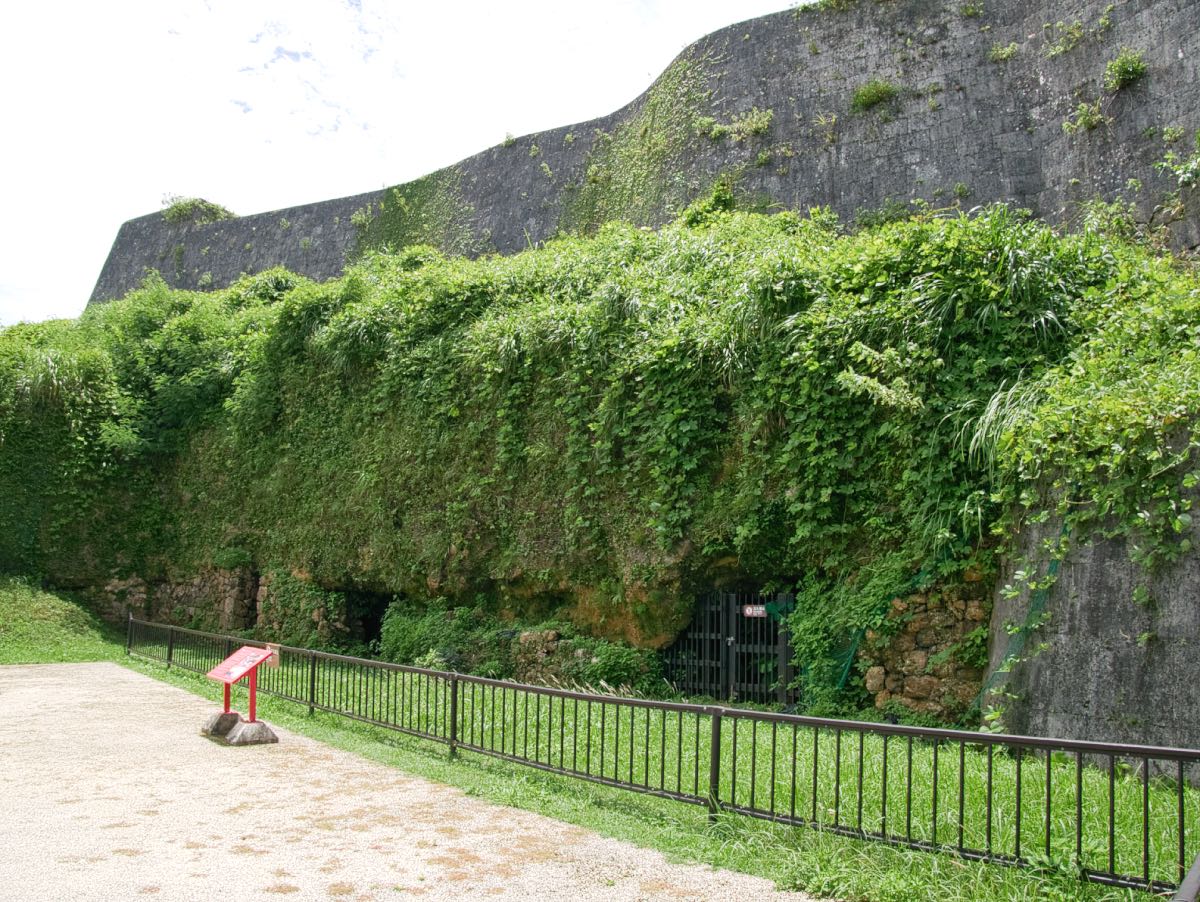
This is the site of a Natural Cave (Gama) that was used as a shelter during the Battle of Okinawa.
It is a place that tells the history of the war and makes us think about the importance of peace.
The View under “Agari no Azana”: Scenic Spot
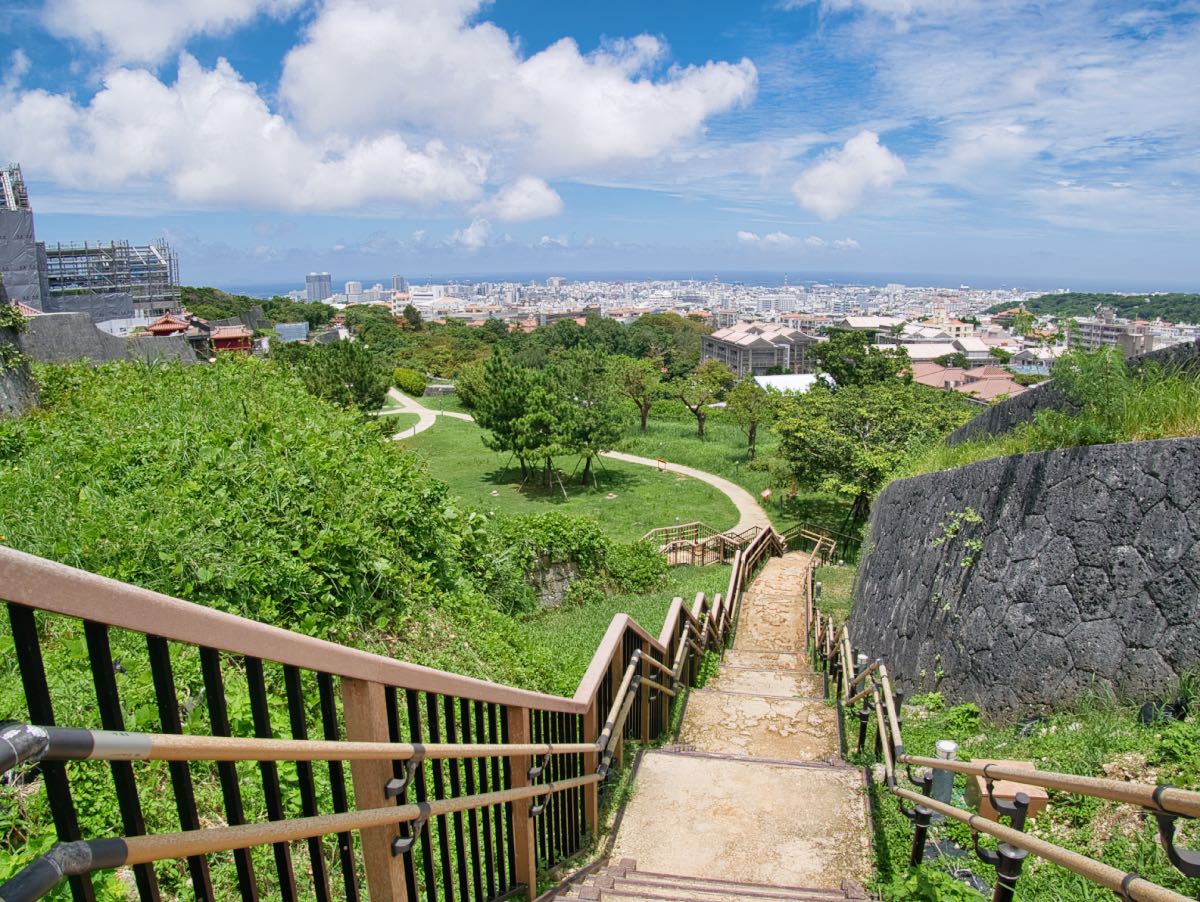
This is a spot located just below the popular “Agari-no-Azana.”
It is located after you exit through Shukujunmon Gate and pass the Gama Ruins.
The view from here is also fantastic, offering a panoramic view of Naha City and the ocean.
Benzaitendo: Beautiful Small Temple
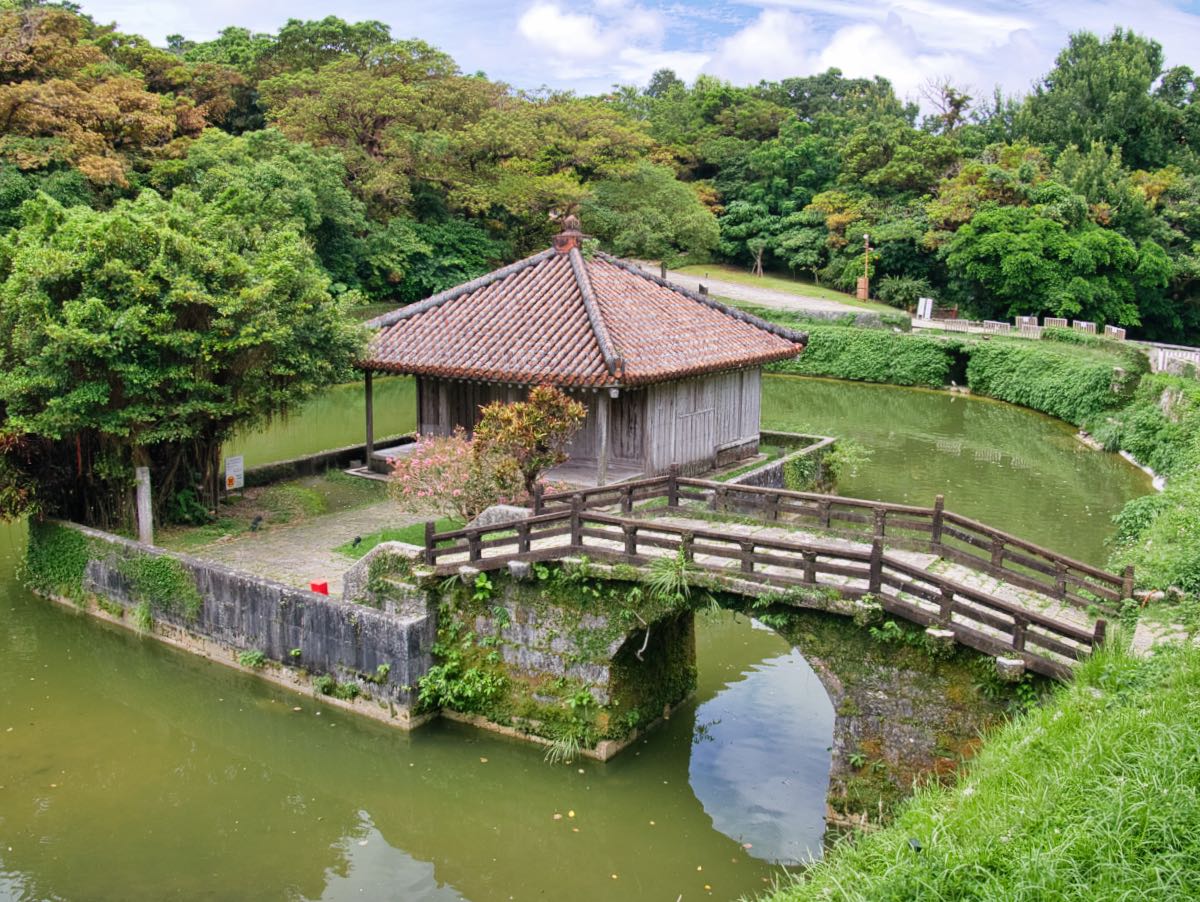
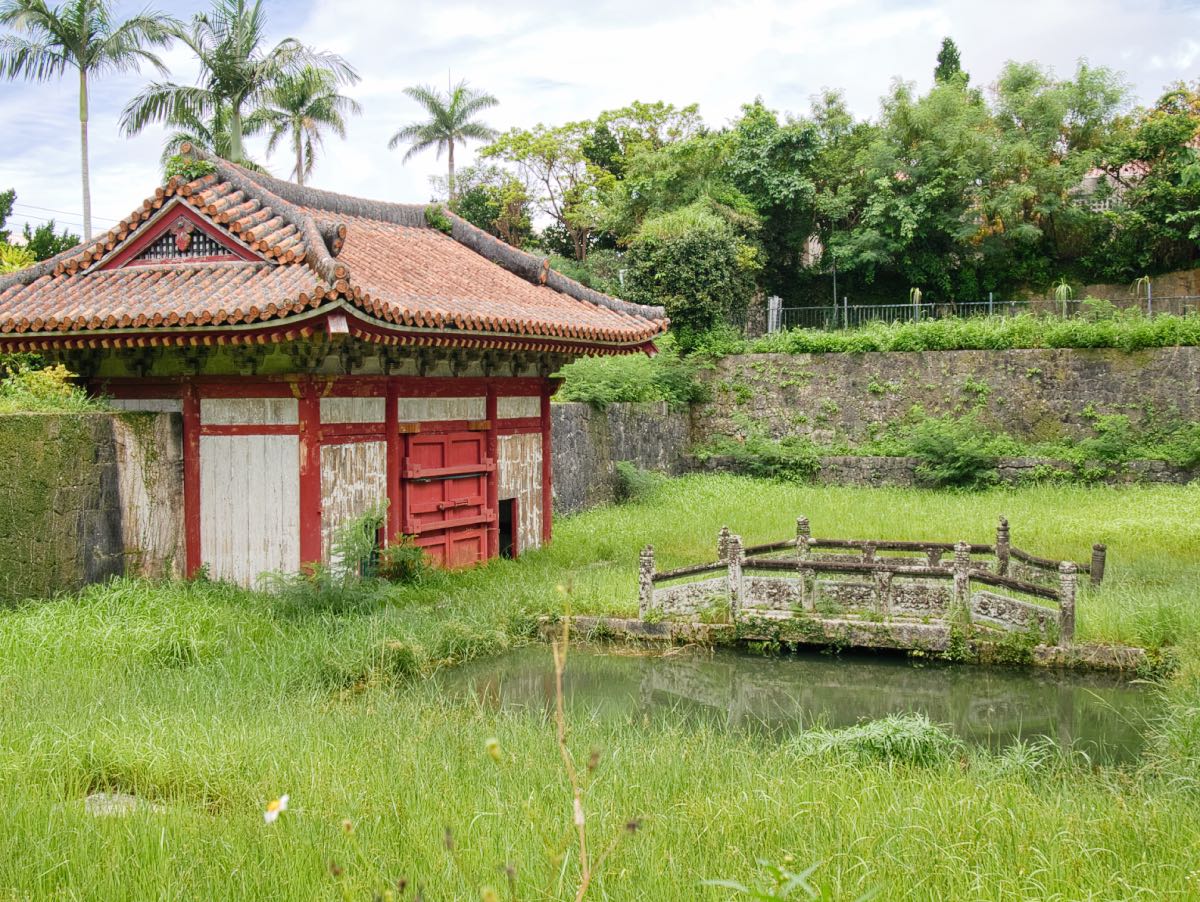
This is a beautiful small temple built in the middle of a pond.
The temple, along with the arch-shaped “Tennyobashi Bridge” over the water, creates a very photogenic landscape.
Enkakuji Ruins: Royal Temple Site
This is the site where a temple closely connected to the Royal Family of the Ryukyu Kingdom once stood.
Today, only the stone gates and walls remain, silently telling the story of its long history.
Shuri Castle: Basic Info, Fees, Parking, and Access
- Basic Information
- Fees
- Estimated Time Needed
- Access
- Parking
Basic Information
| Name | Shuri Castle |
| Photo |  |
| Address | 1-2 Shuri Kinjo-cho, Naha City, Okinawa |
| Official Website | Shuri Castle - Official |
| Tel | 098-886-2020 |
| Hours | Free Area: 8:00〜19:30 April-June, October-November 8:00〜20:30 July-September 8:00〜18:30 December-March Paid Area: 8:30〜19:00 April-June, October-November 8:30〜20:00 July-September 8:30〜18:00 December-March |
| Closed | Open year-round |
| Fee | Adults: 400 yen High School Students: 300 yen Elementary & Junior High School Students: 160 yen Children under 6: Free |
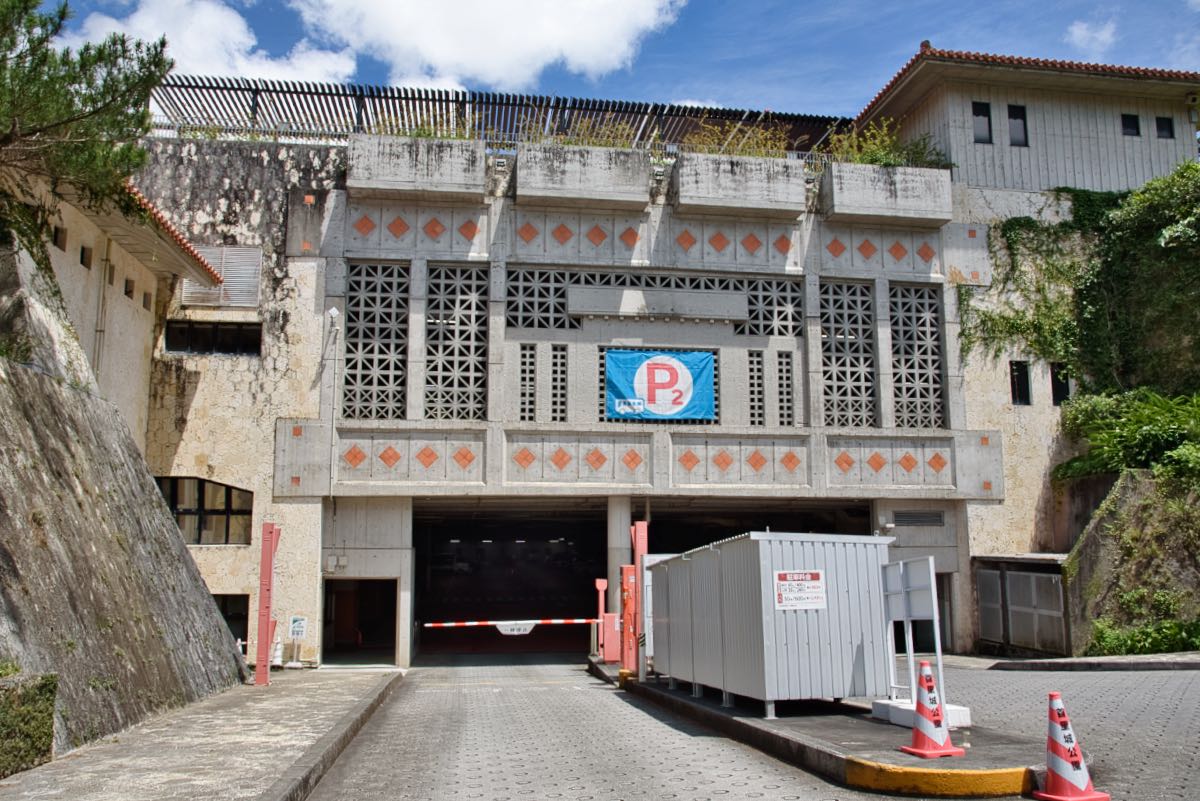
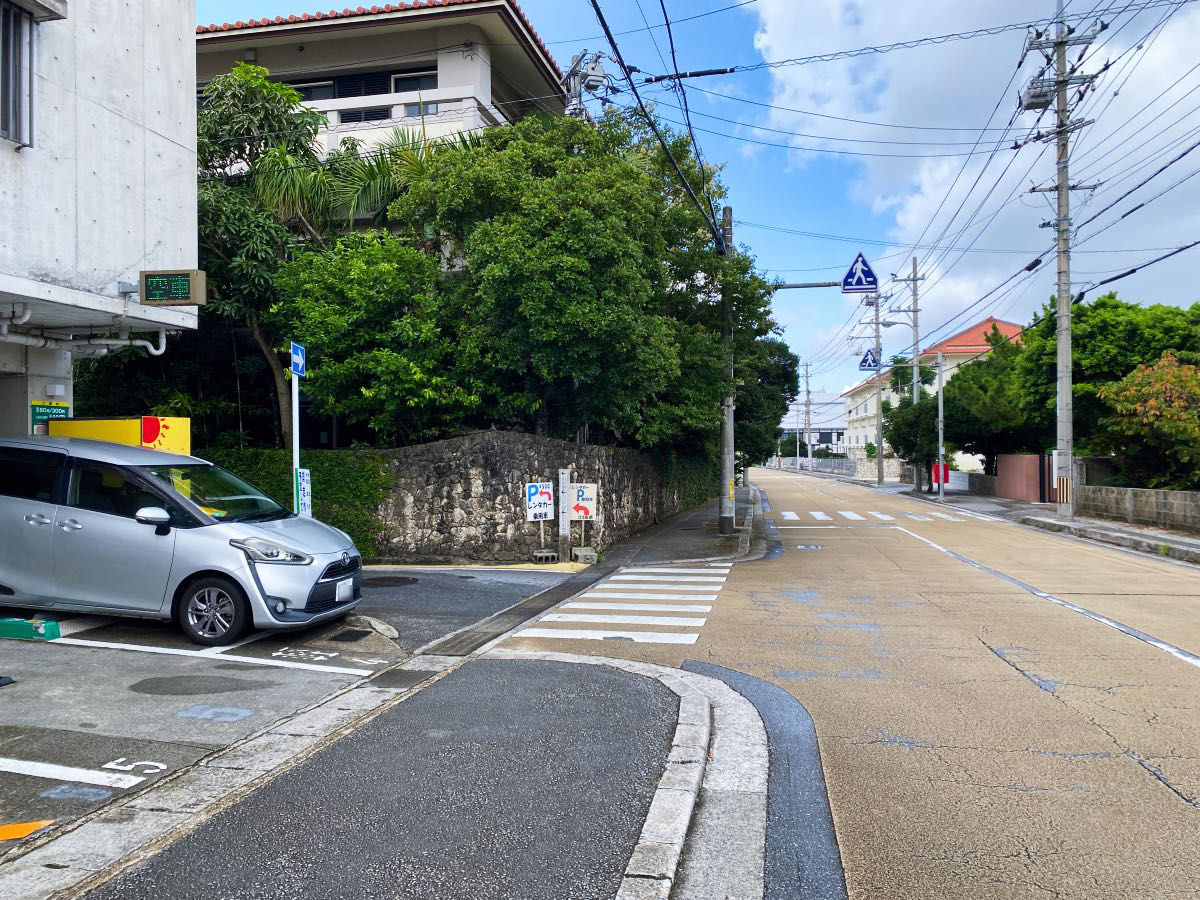
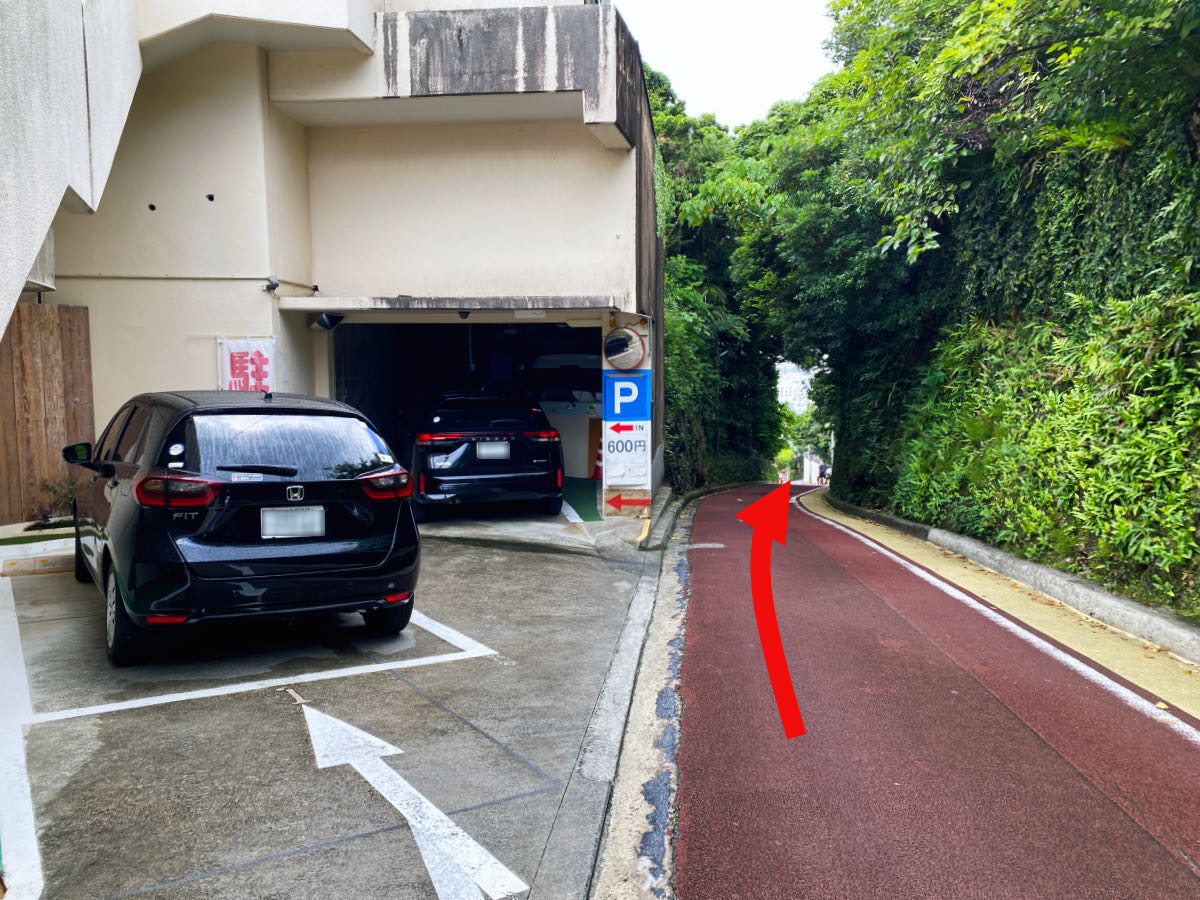
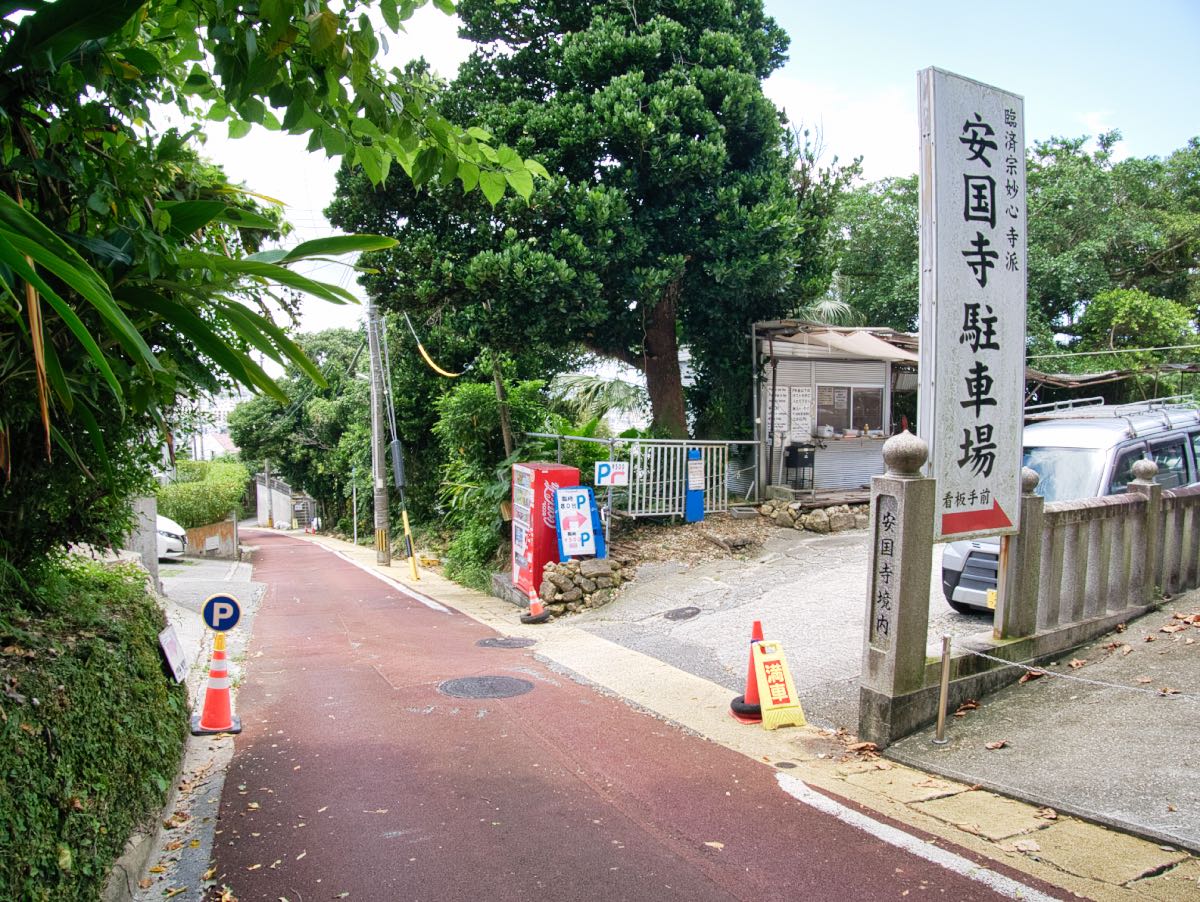
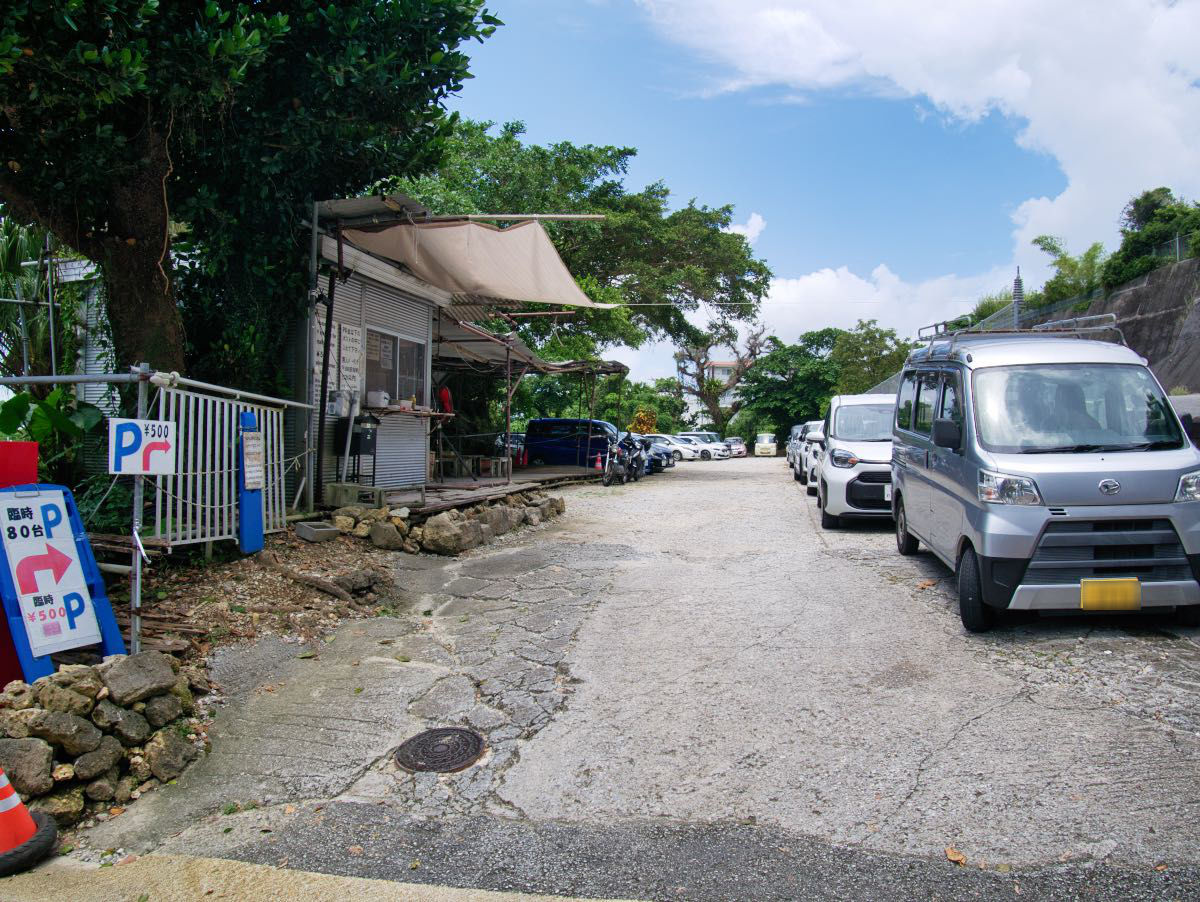
| Parking | Parking lot P1&P2 Standard Vihicles: First 60 minutes: 400 yen Every 30 minutes thereafter: 200 yen Maximum Daily Rate: 800 yen |
| Access | 1. By Monorail, Yui Rail Get off at Shuri Station. 15-minute walk to Shureimon Gate. 2. By Car / Rental Car: About 10km from Naha Airport. Travel Time: 40-50 minutes. |
| Description | Shuri Castle: A World Heritage Site that preserves the history and culture of the Ryukyu Kingdom, and one of Okinawa's most iconic landmarks. |
Fees
Shuri Castle Park is divided into a “Free Area” and a “Paid Area”.
Admission fees for the Paid Area are as follows:
| Category | Fees |
|---|---|
| Adults | 400 yen |
| High School Students | 300 yen |
| Elementary & Junior High School Students | 160 yen |
| Children under 6 | Free |
Estimated Time Needed
Estimated time for the Free Area
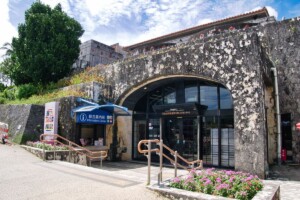
The Free Area includes iconic spots such as Shureimon Gate, the path from Kankaimon to Kofukumon Gates, Shitanun-una (the lower courtyard), and Suimuikan (the visitor center featuring a tourist information desk and souvenir shops).
If you are just doing a quick tour while taking photos, 30 minutes is plenty.
However, if you plan to enjoy the panoramic views from the lookouts or take a break at Suimuikan, we recommend allowing about one hour.
Estimated time for Free + Paid Areas
The Paid Area includes the reconstruction site, the Nyokan-zatsu (souvenir shop), Yohokuden (rest area), the Reconstruction Exhibit Room, and Agari-no-Azana (the East Lookout).
If you visit both the Free and Paid Areas, you should allow approximately 1.5 to 2 hours in total.
Note: As of August 2025, the dismantling of the “Suyané” (temporary roof) over the reconstruction site has begun.
Please be aware that the actual construction process of the Main Hall may not be visible at this time.
- Free Area only: 30 minutes to 1 hour
- Free + Paid Areas: 1.5 to 2 hours
Access










Comments